Thursday, 15 October 2015

Innovative - Week 1 - Animation 1

Our initial idea that we came up with in class was:

  1. Start off with a box
  2. the box gets bigger
  3. starts to peel
  4. which turns into a petal
  5. petals fly's off and turns into a balloon then a hot air balloon
  6. the hot air balloon pops
  7. basket drops
  8. zooms into a person screaming ion the basket
  9. zooms into mouth
  10. to the uvula
  11. it turns into a drop of water 
  12. and it splashes into the puddle
  13. something comes out of the puddle 
  14. it evolves
  15. it turn back into a box
  16. which gets smaller and smaller

These are some of the sketches we did in class for our initial idea. These show the flow of the animation and how each bit was going to lead onto the next bit. We drew it this way as it was the easiest way to show what we wanted quickly.


We decided to be more like Blu in the way that he used the environment he was in and used different surfaces so we would do the same. Using the chalkboard, cintiq and paper, which are all found in the animation room to do so. We also wanted to use some bits of 3D so we decided to use an actual balloon and actual boxes in the beginning because in some of Blu's animation it looked liked he used 3D objects like a plastic bag that he found in the street. Although they weren't found in the room, we had them at home so we used stuff we had, we didn't go out and buy it for the animation.

The day of creating the animation - 

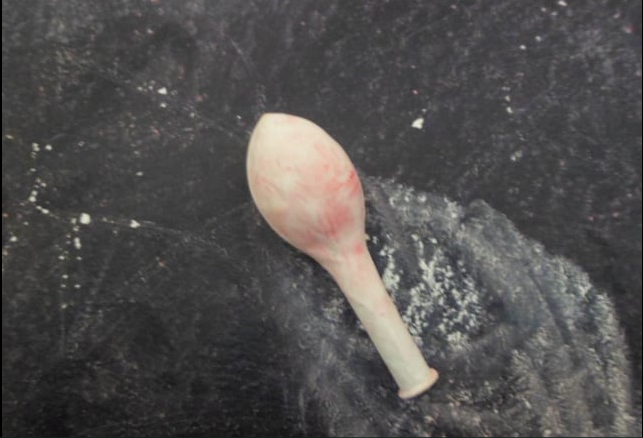
When it came to the day of creating it we couldn't get the boxes so instead we changed the beginning to a build up of Cd's, which were in the room. We also finished it with the splash because when we looked at it we found it was 23 seconds long, which was over the amount.


  These are some pictures of us creating the animation.

Although we didn't use paint in the way Blu does we used other medias that gave the same effect of seeing a faint line of the image before. We used pastels which we smudged to give this effect although at some points it is hard to see the main image which is something i would change next time. We also used watercolour pencils which we used water to blend them out the same way. I think these were very effective in creating something that was very similar to Blu's style of work.

First draft link
The link above is for our first draft. We hadn't put any sound to it and the pace of it was very slow. It ended up being 23 seconds long so to try and get it down to under 10 seconds we took frames out we didn't need like; when the red petal is on we zoomed in and out so we ended up taking out frames which just showed the same thing, when the balloon appears there was also some frame which were not need which we took out. After that we sped up parts which needed to be faster like the the water droplet and the splash, which were way to slow and didn't look right.

After we thought it looked right and everything was the right speed we added sounds. We didn't want music because Blu didn't really use it in his animations, instead he used sound affects at different parts. I think the sound we added worked well and was effective for each part.

Complete work

Above is the link to our complete animation. Overall i think we worked well as a group and our ideas worked well together and we split all the work fairly. The animation itself is good as i feel we have taken things Blu would do and used them effectively in out own animation. I think the only thing that could slightly be changed is some of the colours and medias we used make it hard to see at times where some of the initial lines are.

Wednesday, 14 October 2015

Innovative Animation - Week 1 - Blu

In today's lesson we looked at the artist Blu. We looked at his style of work and then in groups, for homework, we had to create a 2-10 second animation in the style of his work.

Blu - Link to his website

Blu is an Italian street artist, who has been creating street art since 1999. Since then his work and style have become world famous and his creations are referred to as 'epic scale murals'. He started his work in Italy using spray paint and as time went on he started using more and more house paint and working in urban and industrial areas.

This link above is for his piece called Muto and is one of his most famous animated pieces of work. It was painted in the streets of Argentina.
 I like Blu's style of work because not everything is neat and perfect with his drawings and the camera that takes the pictures. Although some themes can be dark and creepy, a lot of the time he portrays themes about real life in a sarcastic and dramatic way. 
Classwork
Bethany, Emily and I chose to work as a group. In the lesson we started to sketch out ideas and decide where we would create for our 2-10 second animation. We also set up an area in class where we experimented with paint in the style of Blu. Each group got to do this.

https://vimeo.com/142626920

The above link is of the whole classes work, which Sandra editing together for us.

https://vimeo.com/144861864

This link is for the part that Bethany, Emily and myself did. Although the camera is out of focus in places i feel the experiment worked well and helped us to get an idea of what Blu does by painting over the stuff he has already painted.


Wednesday, 27 May 2015

Essay Submission


Female Role Models in Animation
How has the female role model changed throughout the years in Disney?

Introduction

Since the 1990’s Disney’s representation of women has changed drastically. Before it was a pre-feminist ideology where the men were always the hero’s, who would save the damsels in distress. This portrayal of the female character derives from the era when females were seen to be submissive and the males were dominant.
“Belle, Sleeping Beauty, Snow White and Ariel are nothing but victims of the male gaze. Being sexual objects they stand in stark contrast to many headstrong and hearty 21st century modern women.” (Bethany Balkham)
 This has changed and although the female character still looks like a typical Disney princess, there are positive case studies of heroines who stand up for themselves and what they believe in. Not needing a man to save them.
The Bechdel test reached notoriety as a comical and accurate way of pointing out the misgivings of female representation within animated features. It was created by Allison Bechdel in her comic strip Dykes to watch out for (1985). Using three questions: 1) is there at least two or more separate female characters in the movie, 2) who talk to each other about things..., 3) ... besides talking about men. It helps to indicate the presence of the female character in the film. Showing how the film industry miss represent women in movies. The test shows how the public has become aware of these problems and now laughs at them and the Disney Princess.  
Looking at the way Disney princesses have evolved and developed to the times and era’s they were created in and how this has affected audiences will strengthen this argument.

The background of Disney and Feminism
Walt Disney was born on December 5th 1901 and died December 15th 1966. Over his lifetime he won 22 Academy Awards and many iconic animations that he will be remembered for. His first feature film Snow White and the Seven Dwarfs (1937) was a huge hit even at the time of the great depression.
Before the 1930’s women did not or were not allowed to work and if they did were thought to be
 “un-American money grubbers, stealing jobs from men who needed them to support their families.” (Mickey Moran)
Although after 1930 many women did work in factories with low pay and long hours in comparison to men. Around the same time women had fought and gained the right to vote, but Josephine McGowan, an American Politician from Ohio (1930’s), noted that “while women gained the right to vote, many were indifferent to their new privilege and remained uninformed on current issues. Politics was still considered a man’s concern, and most women did not have the motivation to challenge this view.” This statement reflects the belief of that period and even though women had the right to vote, men were still seen as dominant and only they could deal with politics.
21st Century women – The definition of feminism is someone who believes that women should be equal to and as free as men. If a man is able to do something, then so should a woman.

Chapter 1 – The Evolution of the Princess
Disney Princess’s can have a detrimental impact on a young girl’s life and how she sees and feels about herself. The Disney Princess usually portrays an unrealistic idea of what a female should look like. Often with a petite body, flawless skin and perfect hair. Some of the first classic animated films to show this were Snow White and the Seven Dwarfs (1937), Cinderella (1950) and Sleeping Beauty (1959). At the time they were created and released the stereotypical ideology of a female was one who cooked, cleaned, ran the house, and looked after the family, while looking beautiful and her best at all times. Lori Baker-Sperry and Liz Greauerholz state
 “Fairy tales written during the eighteenth and nineteenth centuries were intended to teach girls and young women how to become domesticated, respectable, and attractive to a marriage partner and to teach boys and girls appropriate gender values and attitudes.”
This is clearly shown in Snow White when she is cleaning the Dwarfs home. She does this without question and has a motherly instinct to taking care of them. Which socially at that time period was the norm and what everyone thought a female should act like and what every male wanted. In all three films the end goal is to be married to a prince and live happily ever after, with the prince looking after them. This also reflects the social time period when every woman wanted a husband who would take care of them so they too could live happily ever after.
It could be argued that these films represented these ideologies and values because only men created them and that they animated their views of what they wanted the ideal woman to be.
However towards the 1990’s the Disney Princess evolved and although still looked like a typical princess, her values and the messages she conveyed had changed. This is evident in the films: Aladdin (1992), Pocahontas (1995) and Mulan (1998). Baker-Sperry says
 “Recent Disney films and even contemporary feminist retellings of popular fairy tales often involve women who differ from their earlier counterparts in ingenuity, and independence but not physical attractiveness.”
 It can be argued that they still look like the ideology of the perfect woman and so they have not evolved enough to keep up with the times, but their values and messages have changed massively. Before they were just looking for their prince and conveying what a woman should be like, now they are who they want to be. They have their own way of thinking and seeking adventure, not just a husband. Keeping up with the times and lifestyles of the modern day feminist.  On the other hand even the 21st century Disney Princesses who is strong and individual still ends up with a man in the end, which also shows how Disney and our ideologies of women haven’t evolved enough. These examples are: Frozen (2013) (Anna and Kristoff) and Mulan (1998) (Mulan and Shang). Although Brave (2012) has been the first lead female Disney Princess to not end up with a guy and so she could possible lead the way to Disney Princesses not always wanting men.

Chapter 2 – How it can affect the audience
Vincent Faherty works in the area of Social Welfare at the University of Southern Maine. He has published and presented many papers to do with child welfare, social work and education. Faherty argues that “Disney emphasises social vulnerability through the overwhelming male dominance displayed in their animated films”. The fact that males seem to play most roles in Disney including: the villain, the hero and the parent figure, shows how dominant the male gender is. In films like: The Little Mermaid, Beauty and the Beast, Pocahontas and the Hunchback of Notre-Dame, to mention a few, all the mothers are either dead or the films have not explained what has happened to them and so most are brought up by their fathers.  Faherty also says that males who play roles as villains “should be analyzed for its potential negative impact on children and their relationships with caring adults.” He believes that children watching too many films with males who play negatives roles such as villains, will take what they see and reflect it onto males in their lives. This could potentially have a negative impact on families.
On the other hand it could be argued that the same can be said for females, not just males. There are films such as: Cinderella, Snow White and the Seven Dwarfs and Tangled who have evil mothers or step mothers looking after them. Using Faherty’s idea the same can be applied. 

To Summarise
To conclude, the female role model in Disney Princesses have changed throughout the years. Before the Disney Princess had ideologies of being perfect and looking beautiful, finding their prince who would look after them so they could live happily ever after and becoming the ideal woman for that man who would: cook, clean and takes care of kids, the house and the family. Since then the ideologies have changed and the Disney Princess is slowly evolving into what a ‘real’ everyday 21st century feminist woman is. Having a brain which she is not afraid to use, being able to stand up for herself without having to rely on a man to save her, being strong and independent and not always wanting to find a man to live happily ever after with, finding happiness in other things. Although it can be argued that we haven’t developed enough since some ideologies still exist like: looking like the perfect Disney princess, which is still affecting and influencing audiences today.

References
Ashley Bispo, Professor Letizia Schmid (n.d.) 'Fairytale Dreams: Disney Princesses’ Effect on Young Girls’ Self-Images', Dialogues@RU, 9(), pp. 1-3.

() Bechdel Test Movie List, Available at: http://bechdeltest.com/?list=all (Accessed: 28/04/2015).

Bethany Balkham (25/08/2014) Disney Princesses: Role Models or Ridiculous?, Available at: http://www.huffingtonpost.co.uk/bethany-balkham/disney-princesses-role-models_b_5530872.html (Accessed: 20/05/2015).

Mickey Moran (1988-89 academic year) '1930s, America - Feminist Void? The status of the Equal Rights Movement during the Great Depression', Outstanding Paper, (), pp. 1-2.


Word count - 1473
Bibliography word count - 70


I wanted to look at the female role model and the ideologies we have about women especially, looking at the Disney Princess. I researched a lot about feminism and how it has changed through the years in relation to the Disney Princess as well as how it all affects the audience.

I looked at a range of media from blogs and you tube videos to journals and books. I wanted to see what preffessionals and non-professionals thought about the subject.

I feel that as my essay has progressed so has my skills at writing an essay and researching effectively. I am very pleased with the overall outcome as i was able to write and essay about what i am passionate about.

Friday, 15 May 2015

Submissions

Fairly Legal

https://vimeo.com/128398120
I liked working on this task as it is actually footage from a show. Although you knew how to put the video in order it was hard to know where to cut in some parts. I am happy with my end result as i feel i have improved from my first one, it flows a lot better and i haven't just cut to each of them talking i have L and J shaped edits to do this. I also feel i have improved on my continuity and that when i cut everything still looks and sound sounds the same.

Delicious Piece

https://vimeo.com/128398119
I found this task harder than fairly legal as there wasn't a specific storyline you had to follow, you could play around with the footage. I feel that it has definitely improved since the original as the beat/ rhythm i built up i have kept going and the titles do not look out of place. I wanted it to show how they created coffee but to focus more on the peace side to it that is why i have keep the make talking about piece in. I also feel the narrator and what he says goes better with what the audience sees, they both work together.

 Creative Edit

https://vimeo.com/128402203
This task i struggled with. In the beginning i found it extremely hard to start and to find footage that inspired me to create anything. It wasn't until i went onto vimeo and looked for downloadable raw footage that i found these two different videos. I wanted the video to contrast each other. The man in black and white i wanted to portray as unhappy and sad and the woman in colour i wanted to portray as happy.I hope that the audience questions who the girl is and the meaning of it as that is what it's supposed to do. They are not the same woman so why is he thinking of one while looking at another?


Through this whole module i feel i have learnt a lot about editing. How different edits have different meaning and are used to portray and show things to the audience. These tasks have challenged me to improve on my editing and to sometimes think outside of the box as well as tell the rule i should follow.

Sunday, 10 May 2015

Week 12 - Soundtrack 2 - Animation to Sound Submission

When i started this task i knew from the beginning i didn't want to do a animatic and i wanted to push myself to try and do an animation.

Below is two links, the first one is my rough animation and the second one has parts that are finished in. I am overall pleased with it, although disappointed that some of it is still in rough form and not complete to a high standard. I feel i have taken on board the lectures and i have used experimental animation at parts. I didn't want it to look realistic and that is why i have kept it to a very comic/cartoon feel and why many parts aren't extremely detailed but are still effective.

'Rough'


Final Submission


I could improve my animation by fixing up the rough bits, so that all of it looks neat and tidy. But i am pleased with the timing and the different effects i have learnt on TV paint. For instance the crowd sections were a happy acvcident that looked affective because of the different contrast in colours.

I feel i have a better understanding of animation and interpretations of sound and putting image and sound together.

Week 12 - First Draft Essay Feedback

In today's lesson we got feedback of Emily about our essays. When i handed it in i had to do a conclusion. The feedback i got was links to help with adding or backing up my essay. I got a lot of positive feedback and didn't need to change much or change anything drastically. I was happy with my first attempt and with feedback i got. Shows i am on the right track.

Friday, 8 May 2015

Week 12 - Cecil the Cat Submission

Below is my final Cecil the Cat submission. We were told that we only had to submit 30 seconds of it but because i had completed most of it when this was said i decided to submit all of it. Although i have edited out the talking bits as i found it hard to find any other talking to match up with the animation.

Final Cecil the Cat


Sound clips found on youtube, free sound and free sfx.
Animation thanks to Jamie Cartwright

I wanted the animation to have a comical element to it. When i was looking for the sounds i did not use literal terms either. That is why when he screams he screams like a girl. Although hard to find an exact match i wanted to make people laugh when they watched it because of the sound used. I kept the background music all the way through even when other music was added, as it sounded odd when it wasn't there.I chose the background music as it gives a certain creepy / sneaky atmosphere.

I am very pleased with the outcome of my animation and i now have a better understanding of image and the power of sound, whether literal or not.